WORKSHOPS
Pre-conference Workshops
Leading Inclusive schools
An interactive workshop led by Mel Ainscow
Venue: University of the Western Cape (UWC)
Date: 26 November 2026
Cost: R1,500 (this will include teas, coffees and lunch)
The organisers of this conference warmly invite teachers, alongside policymakers, students, academics, researchers, and other stakeholders, to participate in a one-day pre-conference workshop on Inclusive Education.
This workshop will focus on a what is arguably the greatest challenge facing education systems around the world, that of finding ways of including and ensuring the learning of all students in schools. Drawing on the extensive international experience of Professor Mel Ainscow, it will support participants in considering how schools can make all students feel welcome and supported in their learning.
The day will involve presentations based on evidence from international research and structured group activities. There will be a particular focus on the implications for the development of leadership practices.
Participants will also have the opportunity to engage in dialogue with leading scholars in the field, including Prof Roger Slee and Prof Mel Ainscow, as well as with key partners such as the Western Cape Department of Education.
The workshop is designed to support professional learning, critical reflection, and practical exchange, with a strong focus on empowering teachers as central agents in building inclusive and equitable education systems.
Programme outline
Morning session:
- Global developments – towards Education for All
- Understanding the development of inclusive schools
- Changing school cultures
- The tasks of leadership
Afternoon session:
- Reviewing schools
- Formulating improvement strategies
- Developing leadership practices
- Planning next steps
During the workshop participants will be provided with professional development materials, review frameworks and tools that can be used to support improvements within schools and across educational systems.
*Those registering for the full Rethinking (Inclusive) Education for Challenging Times conference can register for this pre-conference workshop at the same time. It is offered as an additional option on the conference registration form.

Mel Ainscow CBE is Emeritus Professor, University of Manchester, Professor of Education, University of Glasgow and Adjunct Professor at Queensland University of Technology. A long-term consultant to UNESCO, he is internationally recognized as an authority on the promotion of inclusion and equity in education. His most recent book is Reforming education systems for inclusion and equity (Routledge, 2025).
Inclusive Education for Whom? Using Norm Critique to Challenge Exclusion in Contexts of Inclusion
| Facilitator | Dr Kerry Frizelle |
| Affiliation | Registered Counselling Psychologist and Senior Lecturer, University of the Western Cape, South Africa |
| Format | Interactive, hands-on workshop |
| Duration | 90 minutes |
| Date and time | 26 November 2026; 09:00-10:30 |
| Cost | R150 to cover coffee/tea and a snack |
Description
If we are committed to inclusive education, we need to ask a fundamental question: Inclusive education for whom? Drawing on Judith Butler’s work on whose lives are regarded as liveable and grievable, this workshop considers whose identities and experiences are recognised within inclusion agendas, and whose remain marginalised. In particular, learners with diverse Sexual Orientation, Gender Identity and Expression, and Sex Characteristics (SOGIESC) may remain at risk of exclusion even within spaces committed to inclusion.
The workshop explores how exclusion is not always produced through conscious acts of discrimination, but can also be sustained through naturalised social norms—assumptions about what is normal, appropriate and expected that often remain unquestioned. Rather than simply developing knowledge about marginalised groups, participants are invited to critically examine the assumptions that shape how they understand and respond to difference.
Through brief conceptual input, individual reflection, collaborative activities and facilitated dialogue, participants will engage with norm critique as a practical and experiential process for making taken-for-granted norms visible and open to questioning. Norm critique is approached as a pedagogy of discomfort, creating opportunities for curiosity, critical reflection and dialogue rather than shame or blame.
Objectives
- Recognise how naturalised norms can contribute to the exclusion of SOGIESC-diverse learners.
- Identify and critically reflect on their own assumptions and positioning in relation to difference.
- Engage with norm critique as a practical approach to creating more genuinely inclusive educational spaces.
- Consider how the process can be adapted for use with educators, students, school leaders and other stakeholders.
What Participants Will Leave With
- A deeper understanding of how norms can shape inclusion and exclusion.
- Greater awareness of how their own assumptions may influence their responses to SOGIESC diversity.
- Ideas for applying norm critique in their own educational contexts.
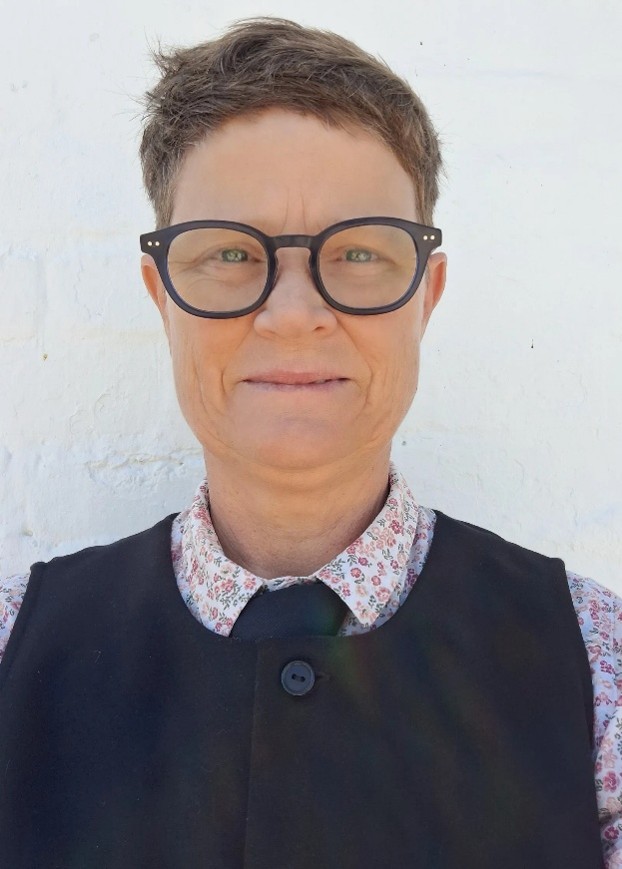
Dr Kerry Frizelle is a registered Counselling Psychologist and Senior Lecturer at the University of the Western Cape. Kerry’s work is informed by Paulo Freire’s position that pedagogy is deeply political and that critical conscientisation is an important component of developing social justice orientated educators.
Ubuntu-Informed Understandings of Neurodiversity in Education: A Participatory Visual Methods Approach
| Facilitator | Prof Fumane Portia Khanare |
| Affiliation | Faculty of Education, University of the Western Cape |
| Format | Interactive, hands-on workshop |
| Duration | 90 minutes |
| Date and time | 26 November 2026; 11:00-12:30 |
| Cost | R150 to cover coffee/tea and a snack |
DESCRIPTION
Grounded in African poly learning environments (multilingual, multicultural and differently resourced), the workshop introduces participatory visual methods (PVM), such as collage, drawing and mapping. These are responsive, low-cost ways of understanding and responding to neurodiversity in education.
The workshop is framed by the double empathy problem and an asset-based ontology, read through Ubuntu. The double empathy problem holds that communication breakdowns between neurodivergent and neurotypical people are mutual, not a deficit located in the learner. Ubuntu similarly understands personhood as relational: a person is a person through other persons. Together with an asset-based view of neurodivergent ways of being, and of the languages, families and communities learners bring, these ideas question the uncritical transfer of Global North diagnostic categories to African schools. They also position learners as co-readers of their schools rather than objects of assessment.
Through hands-on activity, participants will work through a three-move cycle: read the classroom, read it with neurodivergent perspectives, and re-author one everyday arrangement.
OBJECTIVES
- To examine, through the double empathy problem and an Ubuntu-informed, asset-based lens, how ordinary classroom and school arrangements can exclude neurodivergent learners.
- To practise participatory visual methods as a culturally responsive way of eliciting learners’ own readings of their schooling.
- To redesign one classroom or school practice with, rather than for, neurodivergent learners, attending to the ethics of consent, image use and representation.
PARTICIPANTS WILL LEAVE WITH
- A practical read → read with → re-author cycle they can adapt to classrooms, teacher education and community settings.
- A one-page PVM guide with prompts and ethics checks.
- One redesigned arrangement to take back to their own context.
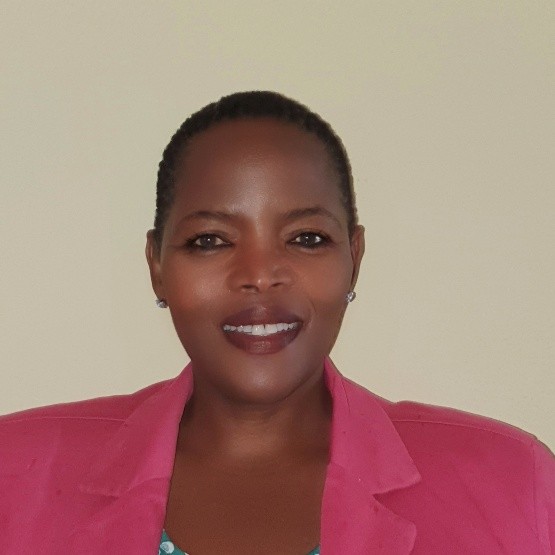
Fumane Portia Khanare is Associate Professor in the Department Educational Psychology at the University of the Western Cape. Her participatory arts-based research advances inclusive education and equity-driven psychosocial support for marginalised communities in the Global South. She leads Neurodiversity Voices Amplified (NeuroVA) initiative and co-edited Successful Pathways of the Well-being of Black Students (2023).
XL Millennium has been appointed as conference organisers for Rethinking (Inclusive) Education for Challenging Times conference. Communication regarding the symposium may come directly from the company.

Contact us
© Rethinking (Inclusive) Education for Challenging Times 2026